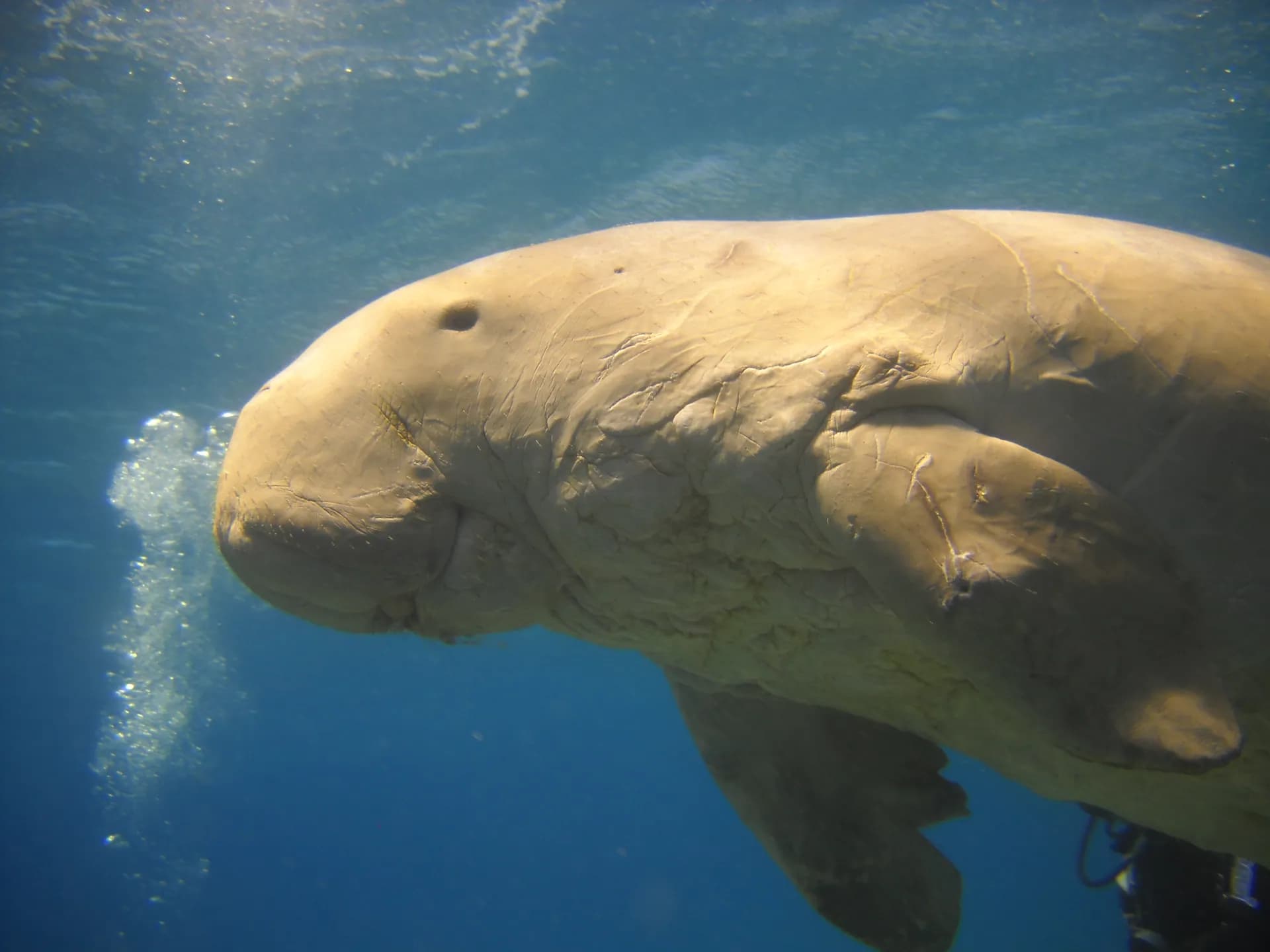
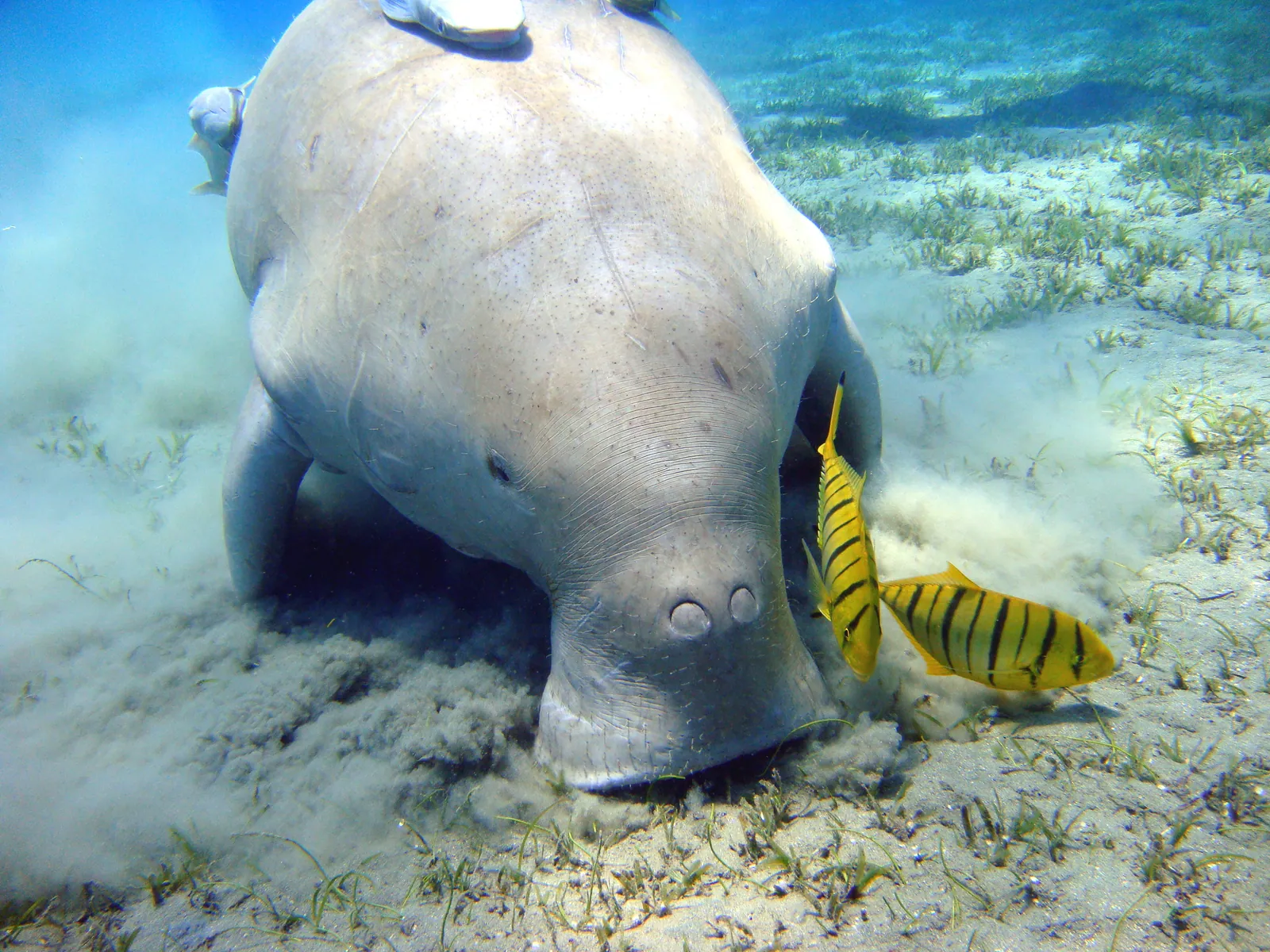
Diugonie żywią się trawą morską, więc najlepsze miejsca to płytkie piaszczyste zatoki z łąkami trawy morskiej.
Marsa Mubarak i Abu Dabbab to najczęściej wyszukiwane nazwy w Marsa Alam dla diugoni.
Zima i sezony przejściowe mogą być dobre, ale obserwacje są zawsze dzikie i zmienne.
Etyczny dystans liczy się bardziej niż zrobienie najbliższego zdjęcia.
Diugon to jedno z najbardziej pamiętnych zwierząt, jakie można zobaczyć w Morzu Czerwonym. Jest powolny, łagodnie wyglądający i zwykle spotykany podczas żerowania w łąkach trawy morskiej, a nie podczas przemieszczania się nad barwną rafą.
Dlatego dobry plan na diugonie różni się od normalnego planu nurkowania na rafie. Nie ścigasz ściany, wraku ani ogrodu koralowego. Czytasz zatokę.
Dlaczego Marsa Alam słynie z diugoni
Wybrzeże Marsa Alam ma płytkie zatoki z trawą morską, a trawa morska jest kluczem. Diugonie się nią żywią, żółwie z niej korzystają, a nurkowie, którzy spokojnie poruszają się nad tymi obszarami, czasem przeżywają niezapomniane spotkania.
Szukasz planu przyjaznego diugoniom?
Wybierzemy odpowiednią zatokę na podstawie aktualnych warunków, a nie tylko słynnej nazwy.
Najlepiej znane nazwy to Marsa Mubarak i Abu Dabbab, ale lokalne raporty i warunki liczą się bardziej niż etykieta na mapie.
Marsa Mubarak
Marsa Mubarak to szeroka piaszczysta zatoka z siedliskiem trawy morskiej i silną reputacją obserwacji diugoni i żółwi. Często odwiedza się ją łodzią i może dobrze sprawdzić się dla mieszanych grup nurków i osób nurkujących z fajką.
Styl nurkowania jest powolny i cierpliwy. Przeszukujesz krawędzie trawy morskiej, piaszczyste pola i granice rafy, utrzymując pływalność na tyle czystą, aby nie uszkodzić siedliska.
Abu Dabbab
Abu Dabbab to jedna z klasycznych zatok dzikiej fauny z wejściem z plaży na północ od Marsa Alam. Słynie z żółwi zielonych i ma długotrwałą reputację związaną z diugoniami.
Łatwo zrozumieć, dlaczego odwiedzający ją kochają: prosty dostęp, płytka woda, potencjał dzikiej fauny i plan, który może pasować nurkom i osobom nurkującym z fajką.
Najlepszy czas na poszukiwanie diugoni
Nie ma idealnego gwarantowanego miesiąca. Chłodniejsze i przejściowe sezony mogą być komfortowe i owocne, ale obserwacje zachodzą, gdy zwierzę tam jest, a warunki pozwalają na pełne szacunku podejście.
Zamiast rezerwować tylko według sezonu, zapytaj, co ostatnio widziano, i wybierz przewodnika, który ochroni zwierzę, nawet jeśli oznacza to zachowanie dystansu.
Odpowiedzialne zasady wobec diugoni
Nigdy nie ścigaj diugonia. Nigdy nie płyń nad nim i nie blokuj jego drogi do powierzchni. Nie otaczaj go grupą. Trzymaj płetwy z dala od trawy morskiej. Jeśli zwierzę odpływa, pozwól mu odpłynąć.
Spotkanie z diugoniem powinno być spokojne. Jeśli grupa się spieszy, plan jest zły.
Często zadawane pytania
Gdzie mogę zobaczyć diugonie w okolicy Marsa Alam?
Marsa Mubarak i Abu Dabbab to dwa z najlepiej znanych lokalnych obszarów do nurkowania i nurkowania z fajką skupionego na diugoniach, ponieważ mają siedlisko trawy morskiej.
Czy spotkanie z diugoniem jest gwarantowane?
Nie. Diugonie to dzikie zwierzęta, a obserwacje różnią się w zależności od dnia, sezonu, warunków morskich i wzorców żerowania.
Jak nurkowie powinni zachowywać się przy diugoniach?
Zachowuj dystans, nigdy nie ścigaj, nigdy nie blokuj zwierzęciu drogi do wynurzenia, unikaj dotykania trawy morskiej i podążaj za przewodnikiem.
Szukasz planu przyjaznego diugoniom?
Wybierzemy odpowiednią zatokę na podstawie aktualnych warunków, a nie tylko słynnej nazwy.