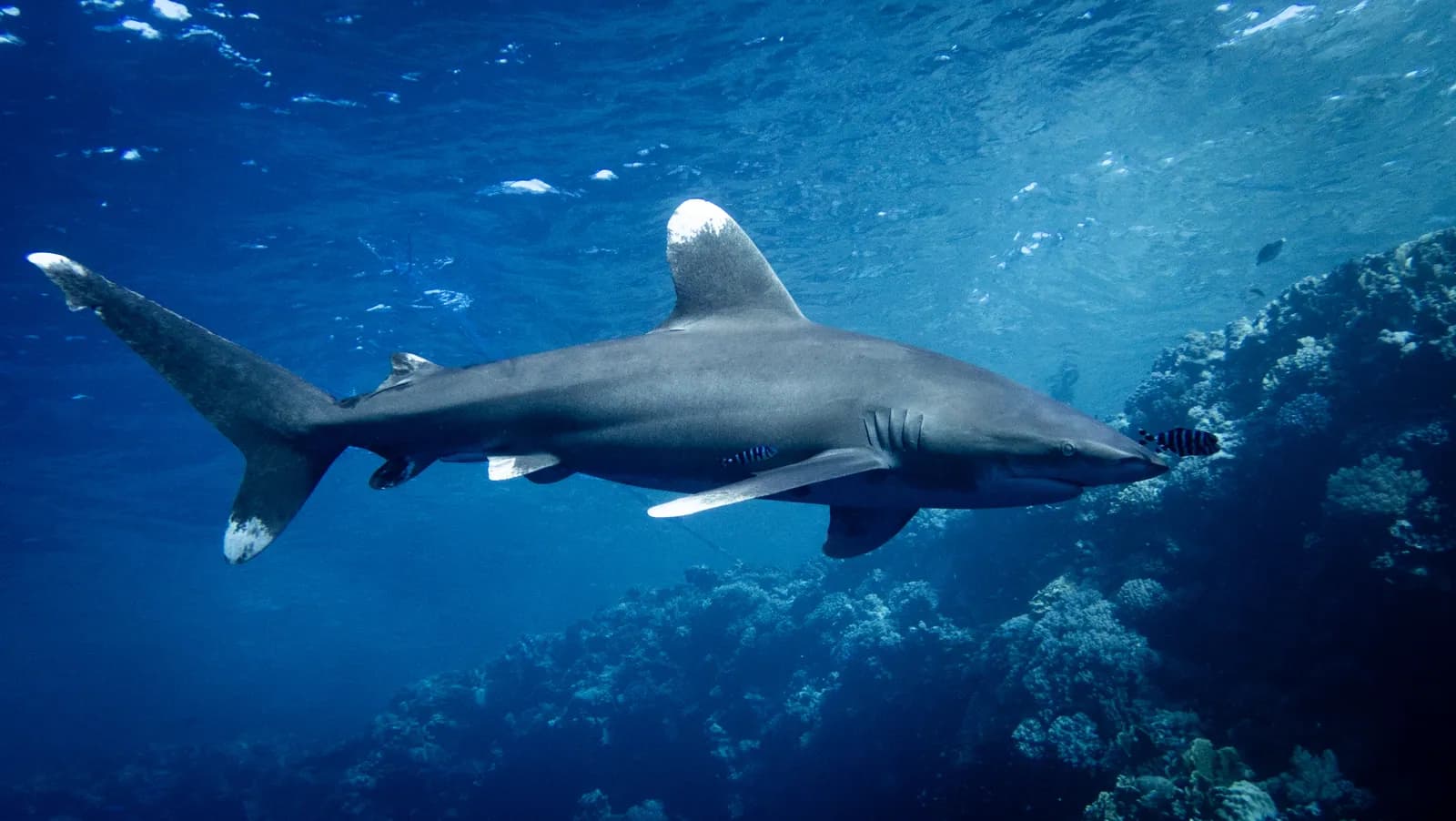
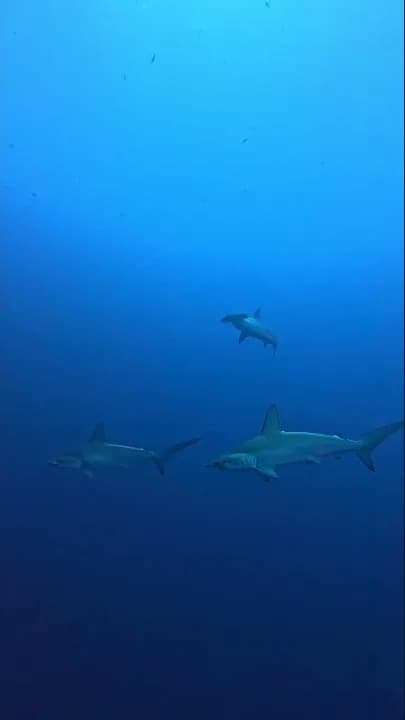
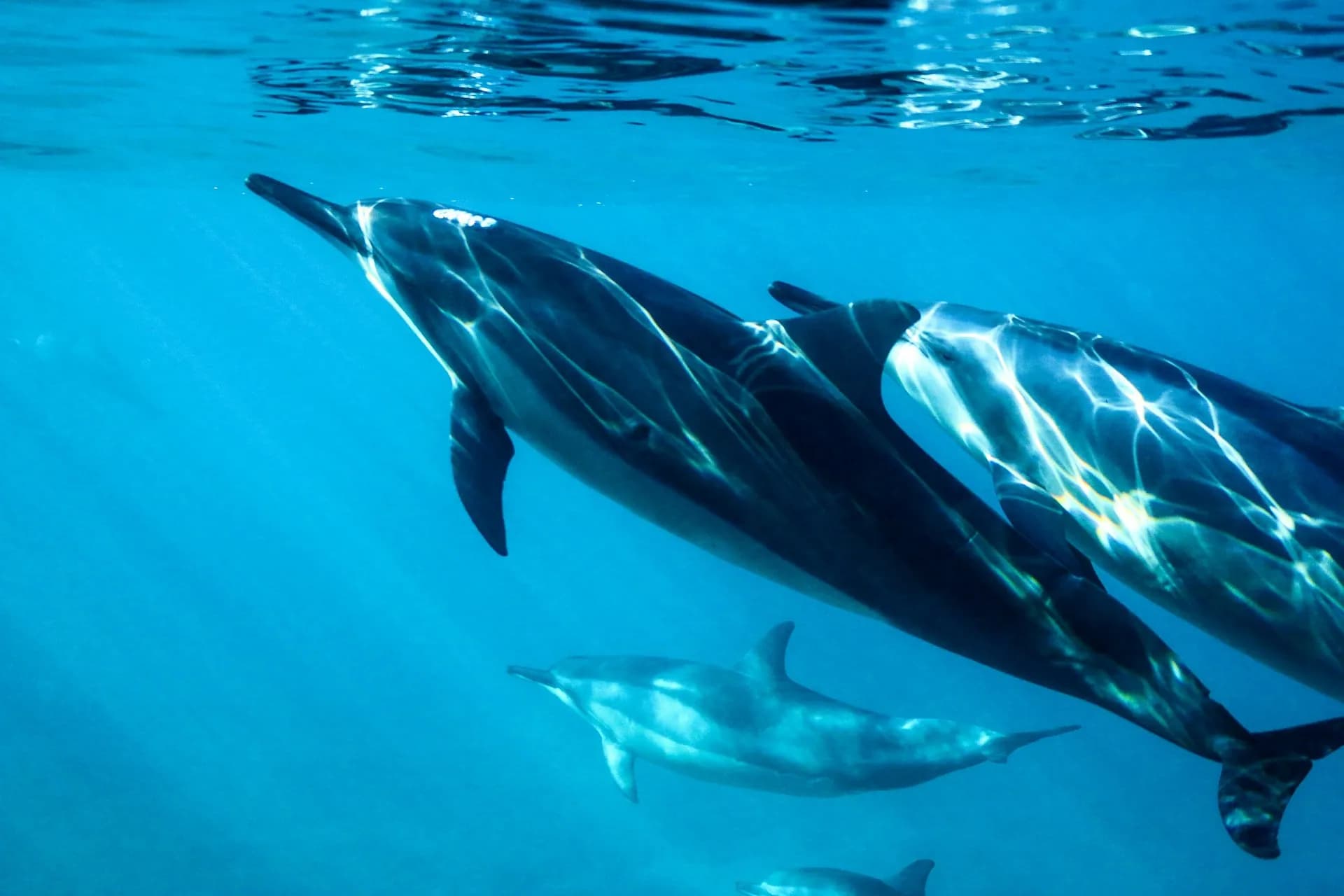
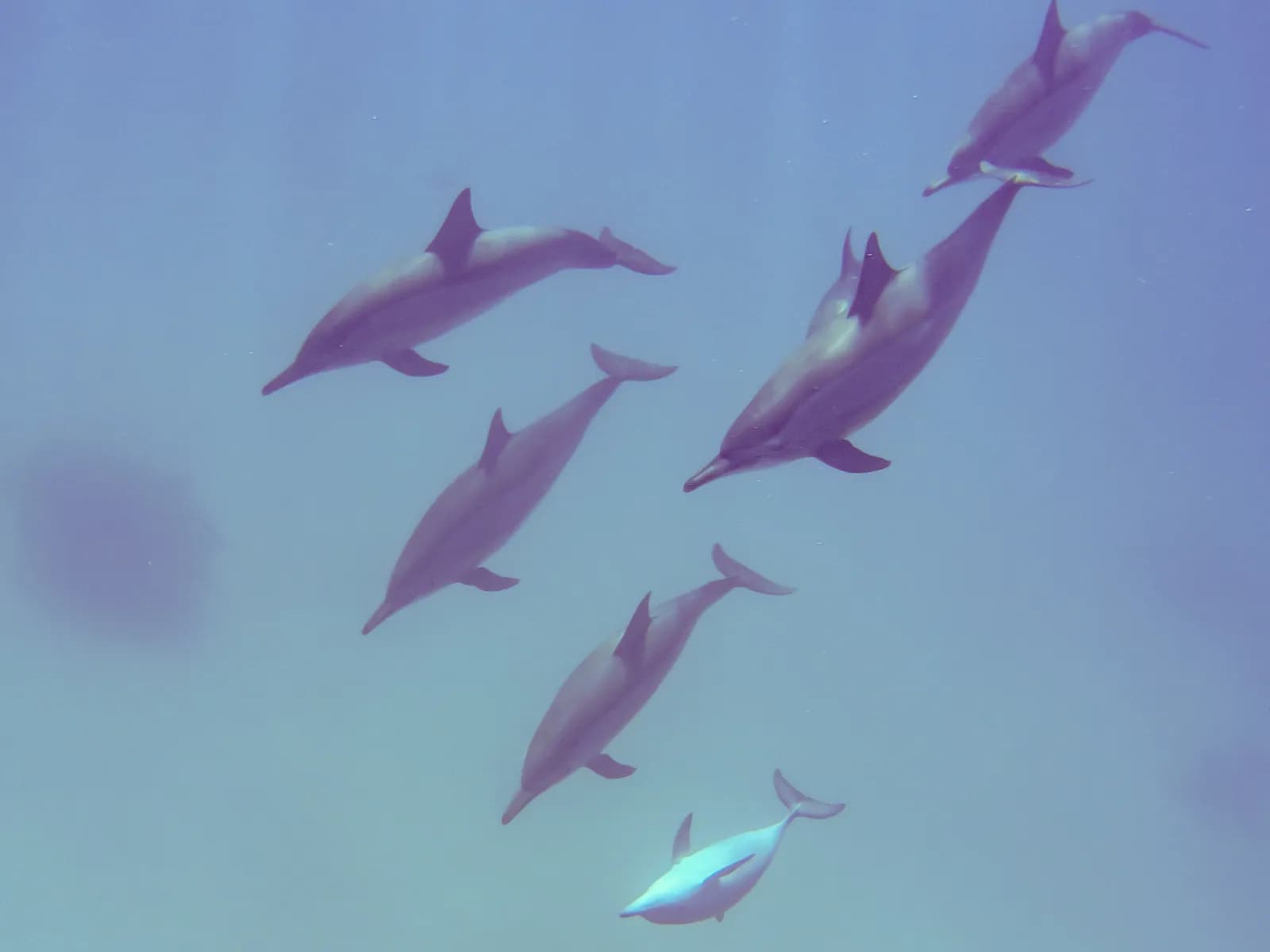
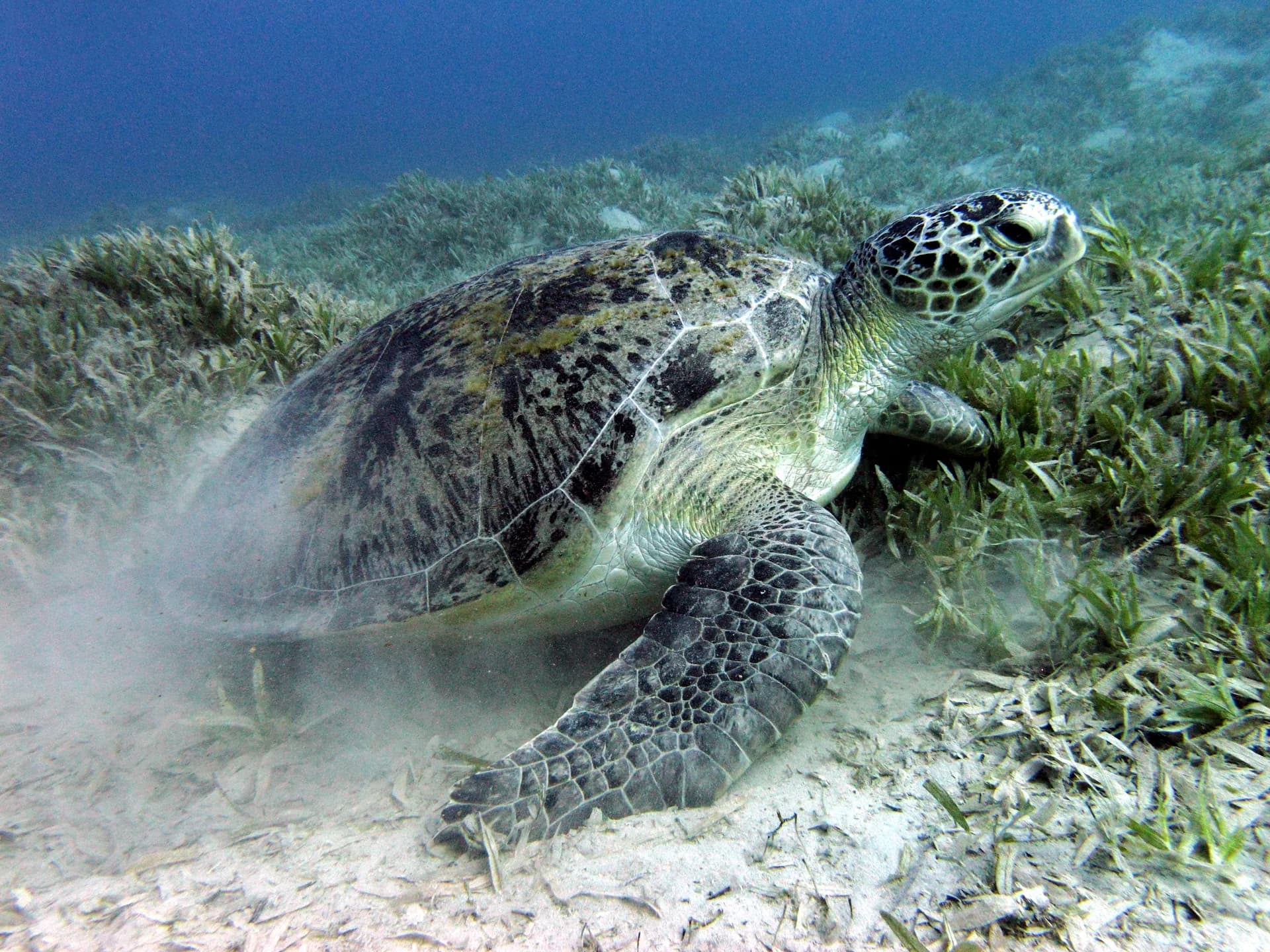
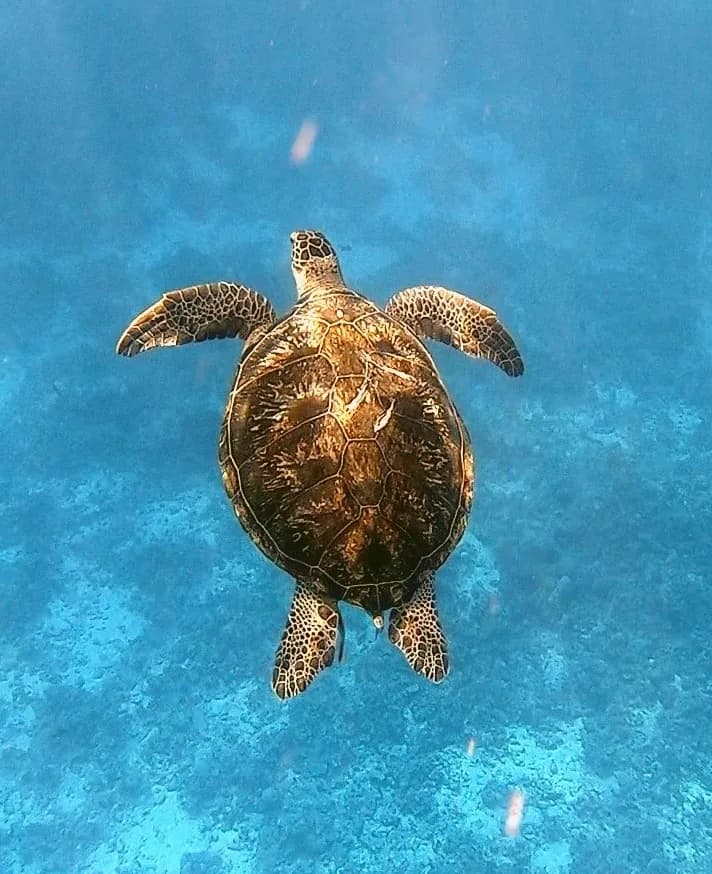
Elphinstone is the shark dive of Marsa Alam: a 300-metre plateau standing alone in open water 12 km offshore, its sides falling away as vertical walls past 70 metres. Oceanic whitetips patrol it from October to December, hammerheads school off the north plateau in summer, and grey reef sharks are there year-round. It is also a demanding site - strong current, deep blue-water profiles, no shallow bail-out - so we run it for advanced divers only.
Elphinstone Reef, 30 km north of Marsa Alam (12 km offshore)
DurationHalf Day
Dives2
Skill LevelAdvanced
Group SizeMax 10
LocationElphinstone Reef, 30 km north of Marsa Alam (12 km offshore)
Elphinstone Reef . Gallery
Video
9 photos . 2 videos
About this trip
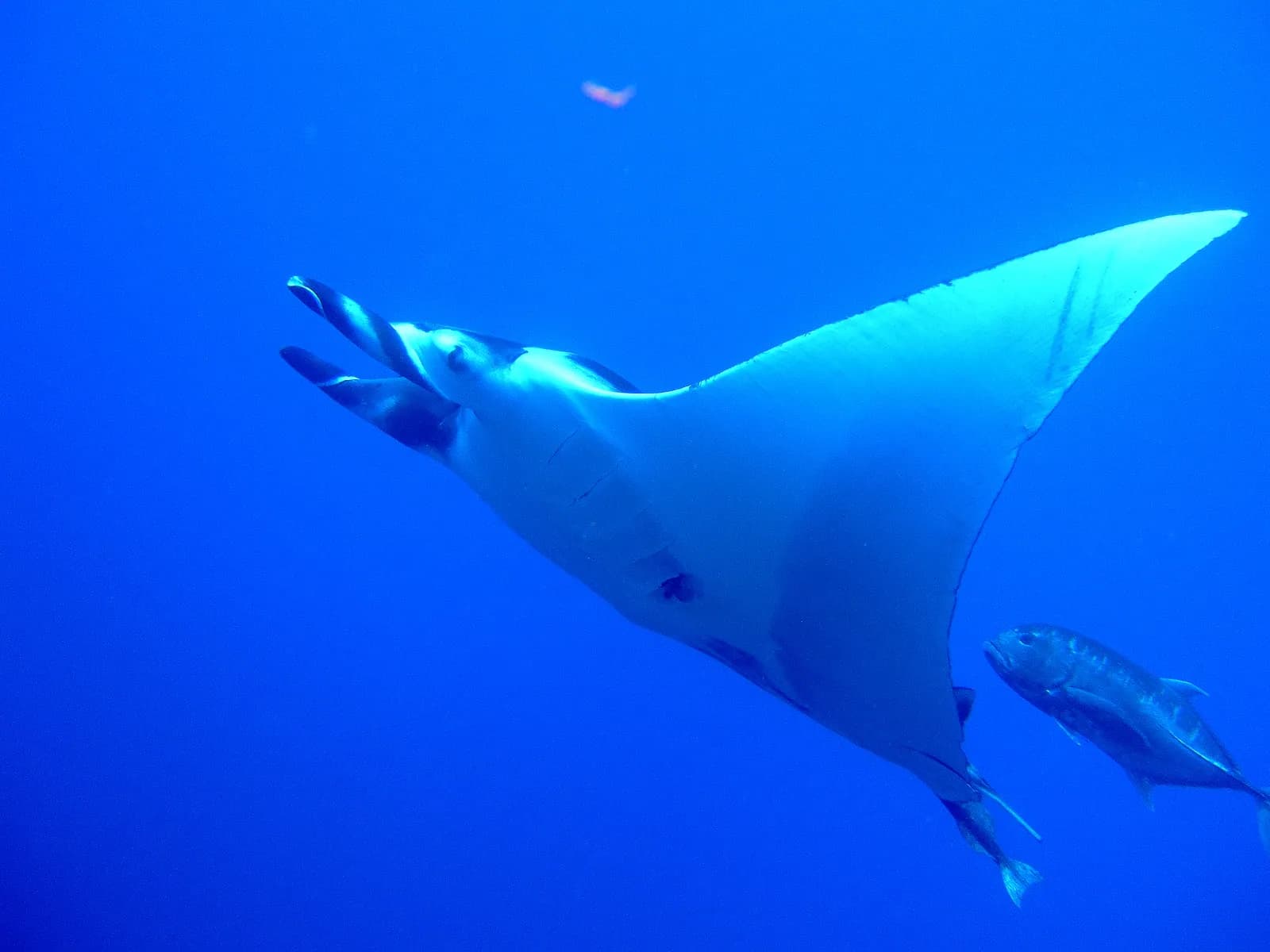
Elphinstone Reef (Sha'ab Abu Hamra) is the icon of Marsa Alam diving and one of the best-known reefs in the Red Sea. It is a narrow, isolated plateau about 300 m long and only 30 m wide, running north to south in open water 30 km north of Marsa Alam town and 12 km off the coast. The top sits at 5 to 8 m; from there both flanks drop as sheer walls past 70 m, and the southern tip falls away into the famous arch at 55 to 80 m - technical depth we do not dive on a recreational day trip. Visibility is usually 25 to 40 m, among the best on this coast, and because the reef stands alone in the blue it collects big animals: oceanic whitetip sharks in late autumn, scalloped hammerheads in summer, grey reef and silvertip sharks through the year, plus tuna, barracuda, eagle rays and the occasional reef manta in spring. The day is a fast 3 to 5 hour speedboat run: hotel pickup, a full briefing, about 45 minutes across open water, two guided dives with a surface break of water and snacks between them, and back at your hotel by lunch. What Elphinstone asks in return is competence - current can run hard along both plateaus, the profiles are deep, and there is no shallow reef to drift onto if things go wrong.
Trip Highlights
Oceanic whitetips
Peak season October to December
Summer hammerheads
Schooling off the north plateau
Vertical walls
Sheer drop past 70 m
Advanced divers only
AOWD + 30 logged dives
Soft-coral curtains
Gorgonians and fan gardens
Blue-water pelagics
Tuna, barracuda, eagle rays
25 to 40 m visibility
The clearest water on the coast
Fast speedboat run
45 minutes each way, 5 h door to door
The reef: what you are actually diving
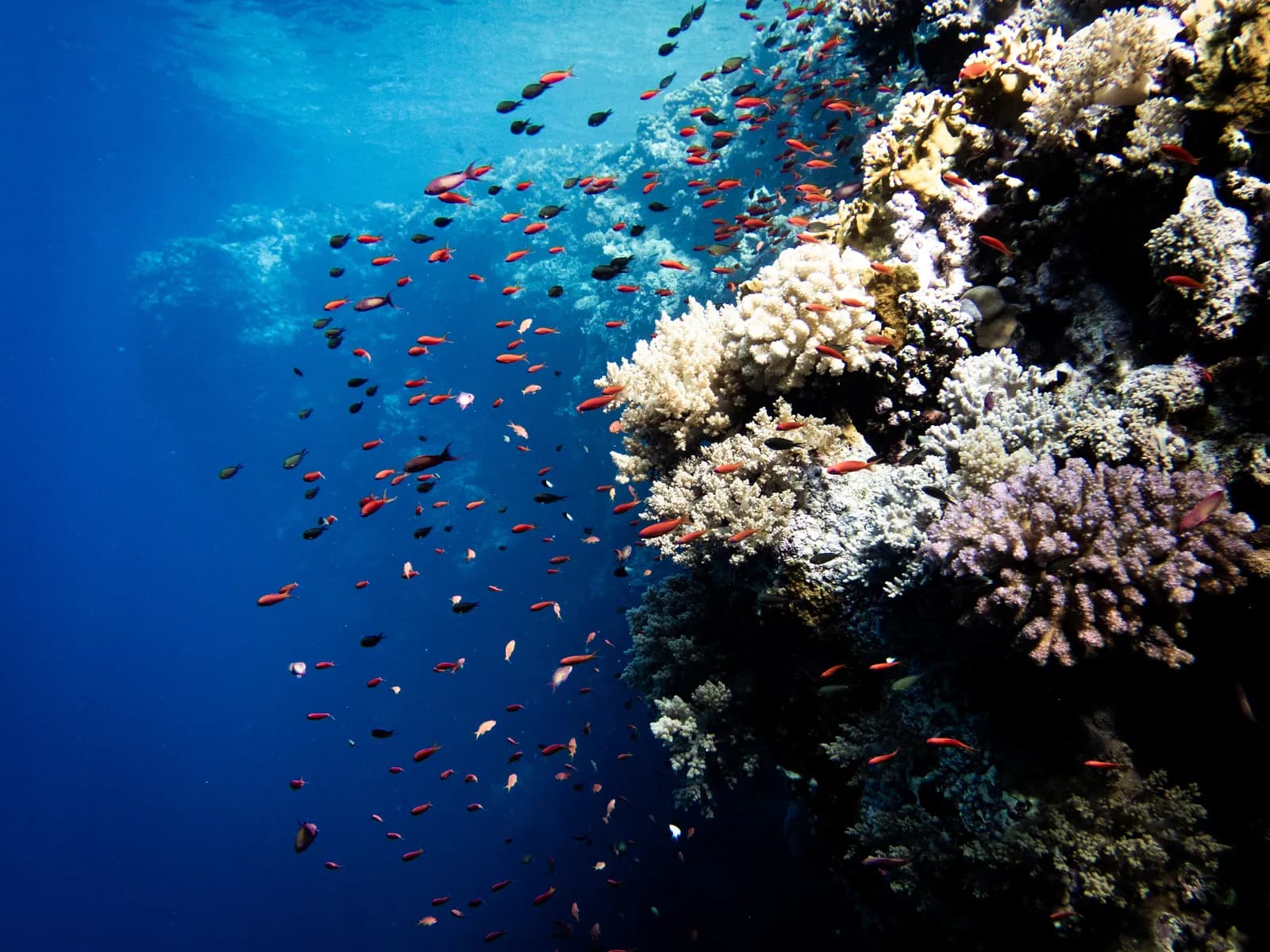
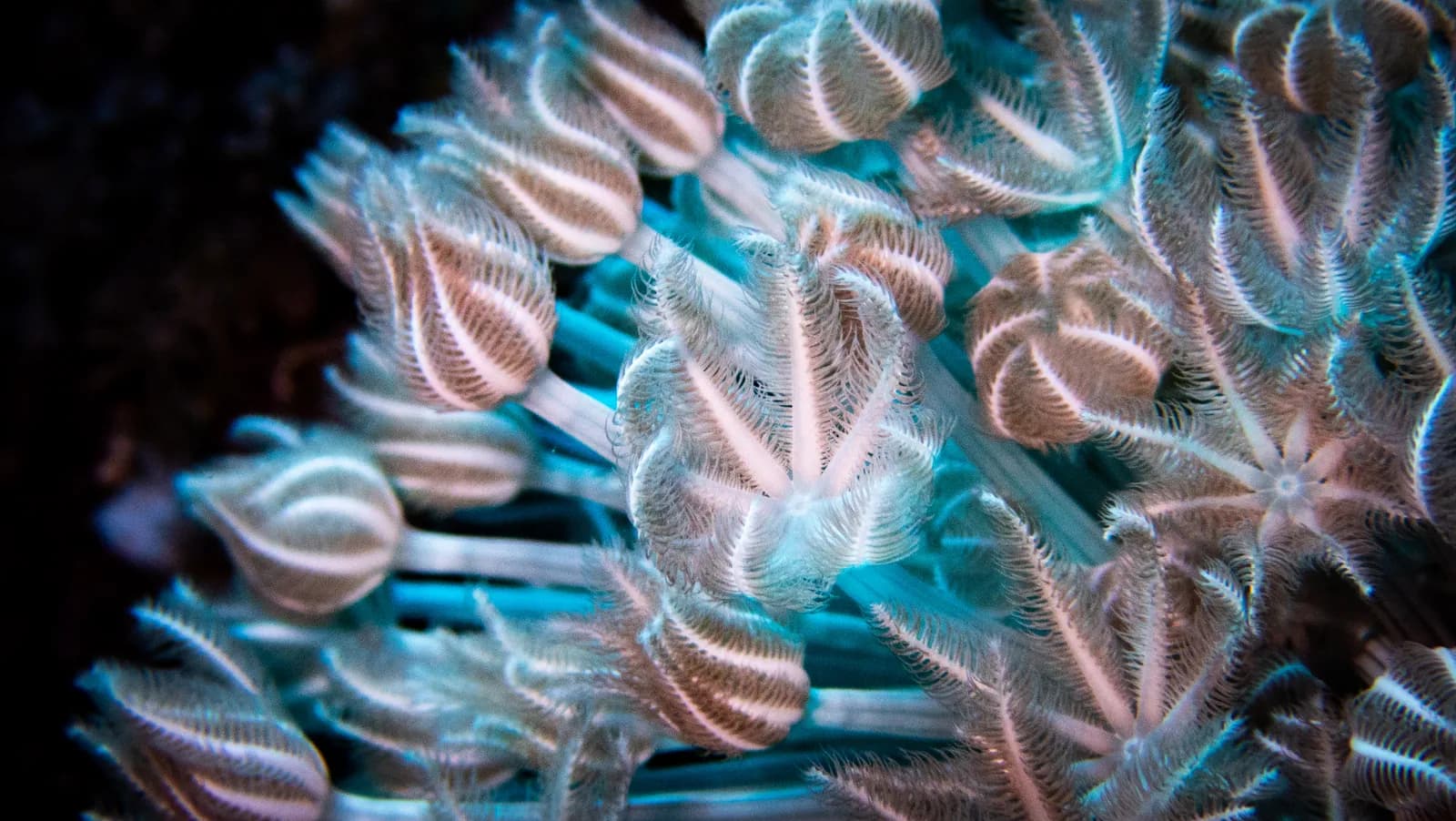
Elphinstone is not a fringing reef you can swim back to shore from. It is a solitary plateau standing in open water, roughly 300 m long by 30 m wide, aligned north to south so the prevailing current runs the length of it. The top of the reef sits at 5 to 8 m. Both flanks drop away immediately as vertical walls that pass 70 m and keep going, hung with soft-coral curtains, gorgonian fans and clouds of anthias and fusiliers.
Each end has a plateau that shelves out before the drop. The south plateau, at around 20 to 30 m, is the usual first dive and the classic oceanic whitetip station. The north plateau, deeper at 25 to 40 m, is where scalloped hammerheads school in summer. Below the southern tip lies the famous arch at 55 to 80 m - a genuinely technical dive that we do not include in a recreational day trip, whatever anyone else offers. Everything we dive stays inside recreational limits.
Who Elphinstone is for - and who it is not for
This is an advanced site and we book it as one. The minimum is Advanced Open Water (or equivalent) with at least 30 logged dives, of which several should be real drift dives in current and dives to 30 m. You need reliable buoyancy control in mid-water with no reference, comfort in deep blue with the bottom out of sight, the ability to deploy your own SMB, and enough air discipline to hold a group profile. If you have been diving within the last six months, all the better; if not, tell us and we will put you on a check dive first.
It is not the site for a first sea dive after a course, for anyone still task-loaded by their own gear, or for divers who get uneasy when the blue goes dark below them. If Elphinstone is your goal for the trip, the honest route is to build up to it: two or three days on the bays and house reefs first, then Elphinstone with your buoyancy dialled in. We would rather move you to a better-suited site than watch you spend the dive fighting it - and we do turn people away at the briefing when the logbook does not match the conditions that day.
The sharks: which species, which month
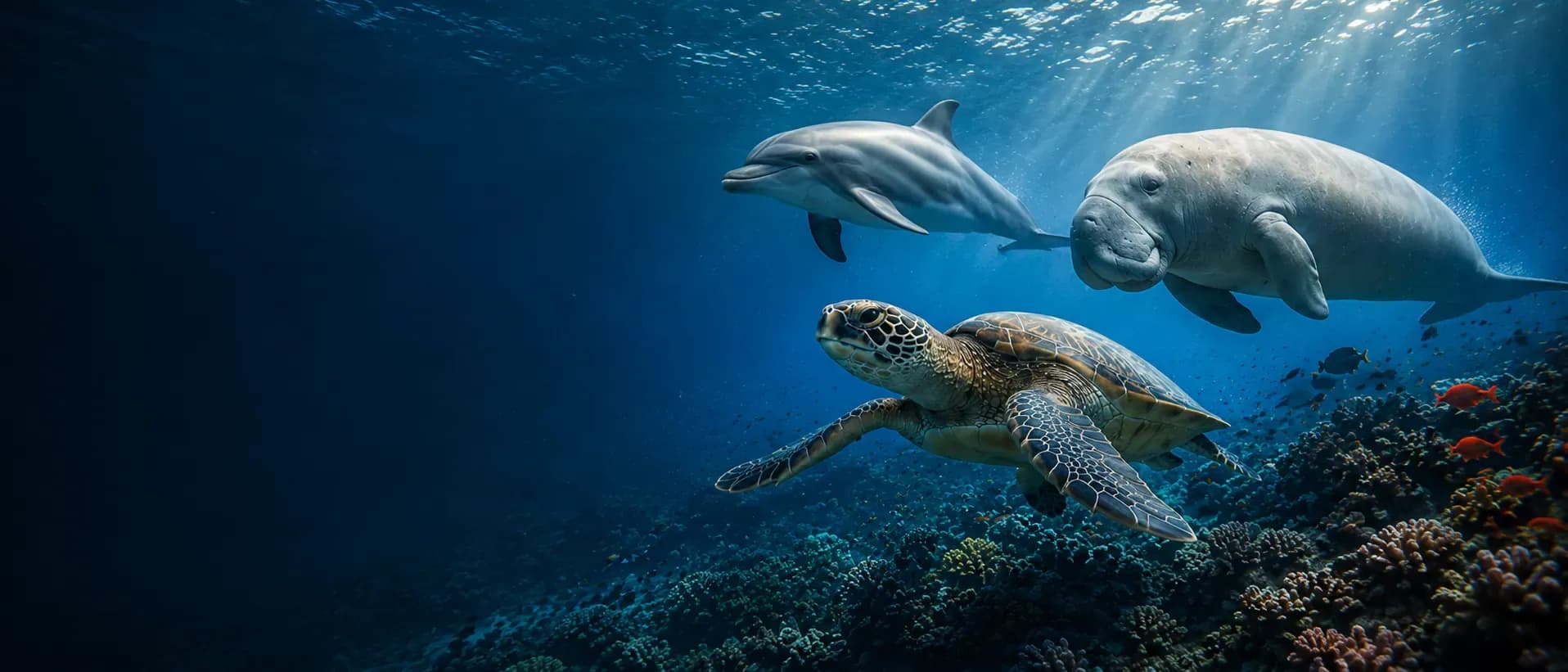
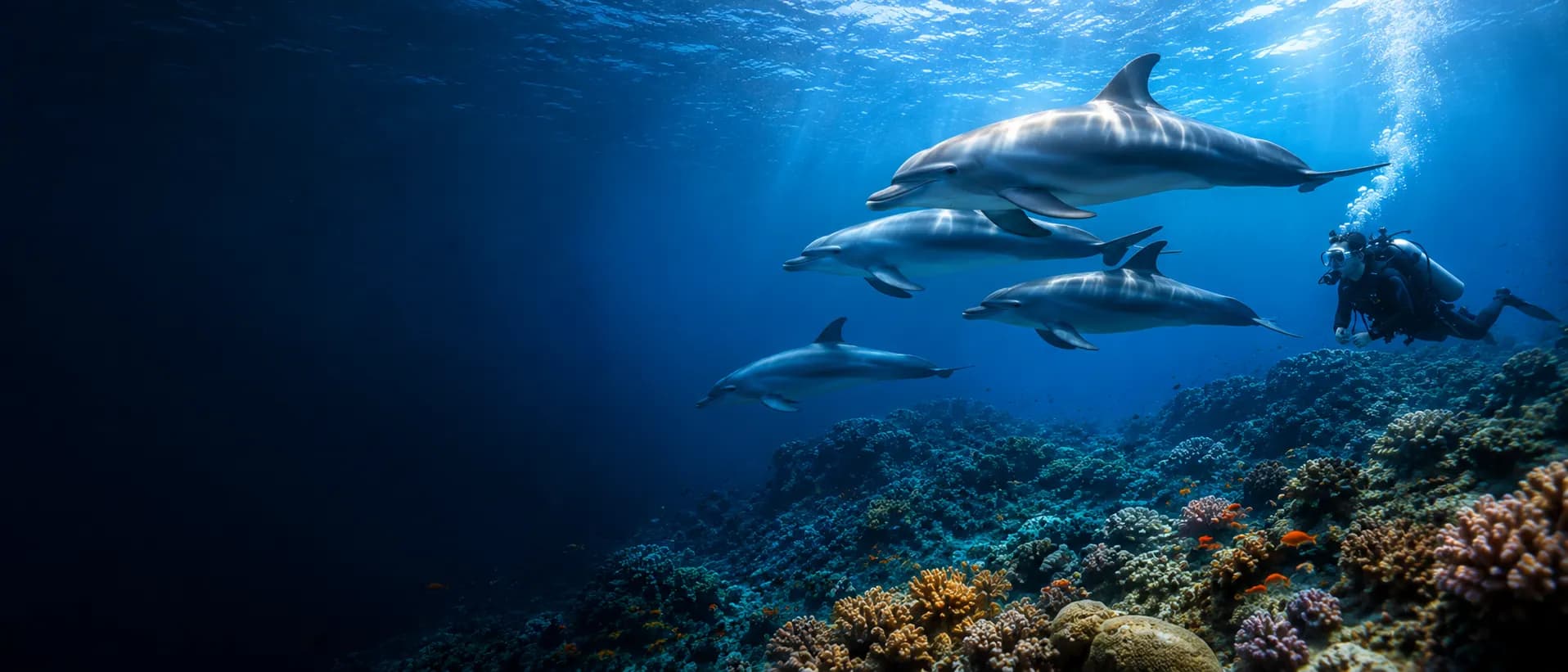
Oceanic whitetip (Carcharhinus longimanus) is the one Elphinstone is famous for. These are open-ocean sharks that come in close to the reef from roughly October to December, peaking around the full moon in November; they are curious, unhurried and often circle a group at a few metres for a whole safety stop. Scalloped hammerheads school off the north plateau in summer, June to September, usually deeper and early in the morning. Grey reef and whitetip reef sharks are resident year-round, and silvertips turn up regularly along the walls.
None of this is baited, fed or chummed - it is illegal in the Egyptian marine park and it changes shark behaviour permanently. That means encounters are genuinely wild: some days the blue is empty and you dive a spectacular soft-coral wall instead. Across a season roughly two dives in three at Elphinstone produce a shark of some species, and the whitetip window in late autumn is far better than that. We also brief you on how to behave around an oceanic whitetip - stay in the group, stay vertical in mid-water, keep eye contact, no chasing, no touching, do not swim off alone at the surface.
Currents, conditions and how we manage them
The current at Elphinstone runs mostly north to south and can be strong, and it splits around the reef so both walls and the plateau tips behave differently on the same day. Our guides read it at the surface before anyone kits up, and the plan follows the water: sometimes a negative entry straight to the plateau and a drift, sometimes a sheltered wall on the lee side, occasionally a decision that the day is not diveable at all. Nobody gets talked into an entry that does not look right.
Practically: groups are capped at 4 divers per guide, everybody carries an SMB and a whistle, and the speedboat stays with the group and picks divers up wherever they surface, which is why drift profiles are safe here. We plan conservative profiles with a full safety stop, and nitrox 32% is available for an extra fee - strongly recommended, since it buys meaningful bottom time on the deeper plateau. If the forecast turns, we move the trip to another day or refund it rather than run it in bad water.
How the day runs
Elphinstone is a fast half-day, not a boat safari. We pick you up between Port Ghalib, Marsa Alam town and El Quseir, drive you to the speedboat launch point on the north coast, and check certification cards and logbooks before boarding. The full briefing happens before the crossing, so the 45 minutes of open water is decompression time for your head rather than a scramble. Two guided dives follow, with a surface interval on board over water and snacks.
The whole thing is about five hours door to door and you are back at the hotel for lunch, which is why so many guests pair Elphinstone with a relaxed shore dive the next morning. Bring your certification card and logbook - we do check them - plus a wetsuit appropriate for 22 to 29°C water, and your own computer if you have one. Rental equipment is available at extra cost.
Best time to dive Elphinstone
The reef is diveable year-round, and the season you pick decides what you are likely to meet. October to December is oceanic whitetip season and the reason most people come; November is the peak. June to September brings the summer hammerhead schools on the north plateau and the warmest water at 28 to 29°C. Spring, March to May, is the quietest for sharks but the best for visibility and the odd reef manta, and the walls are at their most colourful.
Water runs from about 22°C in February to 29°C in August; a 5 mm wetsuit is right for winter and a 3 mm for summer. Wind is the real constraint rather than season: Elphinstone sits in open water and a stiff northerly shuts it down at any time of year, which is why we always keep a sheltered alternative site in reserve. Book two to three days ahead in high season, and if the whitetips are your goal, give yourself more than one shot at the reef rather than a single day.
What's Included
Included
2 guided dives with tanks and weights
Dive guide (max 4 divers per guide)
Speedboat trip and marine park fees
Hotel pickup & drop-off
Bottled water
Snacks
Not Included
Full rental equipment
Lunch
Nitrox
Insurance
Tips
A Day in Detail
06:00 / 11:00
Hotel pickup
We collect you from your hotel and transfer you to the speedboat launch point. Departure time depends on sea conditions and the confirmed speedboat slot.
07:00 / 12:00
Speedboat departure
Certification and logbook check, then a full briefing: the plateau layout, the dive plan, maximum depth, the turn point, current and lost-buddy procedure. A fast 45-minute ride follows.
07:45 / 12:45
Dive 1 - South plateau
Negative entry if there is current, down the wall to the plateau, then a drift along soft-coral walls with the blue on one shoulder. Sharks come from the open water, not the reef.
09:00 / 14:00
Surface break
Water and snacks on board. Your guide debriefs dive one, checks everyone's air and no-deco time, and plans dive two around what the current is doing.
09:45 / 14:45
Dive 2 - North plateau or wall drift
The north plateau is the hammerhead side in summer; in stronger current we drift the eastern or western wall instead. Chosen on the day, never forced.
11:00 / 16:00
Return to marina & hotel drop-off
Back on land and at your hotel about 5 hours after pickup - in time for lunch.
Marine Life You May See
Wild animals - sightings are likely, not guaranteed. We never bait, chase, or surround.
If there were a way to give 10 stars, Elphinstone Reef would deserve every single one of them!
Every time we visit Elphinstone, it delivers something spectacular. The reef is absolutely breathtaking, packed with vibrant marine life, stunning coral formations, and endless underwater action. No two dives are ever the same, which is exactly why we keep coming back.
Our most unforgettable experience was in December when we had an incredible close encounter with a Longimanus (oceanic whitetip shark). Seeing such a magnificent animal from so close was both thrilling and humbling. It was one of those moments that reminds you why you fell in love with diving in the first place.
Elphinstone seems to have a magical rule: if you arrive expecting something amazing, it will exceed your expectations anyway! From curious reef inhabitants to big pelagic surprises, this place never disappoints.
For divers, Elphinstone isn’t just a dive site, it’s an addiction. The only downside is that every reef you visit afterward has a very hard act to follow!
Can’t wait to come back and see what surprises Elphinstone has waiting for us next. 🦈🌊🤿
MS
Marta Stashevska
Jun 2025
Google
One of the most thrilling dives I’ve ever done. Elphinstone Reef offers stunning drop-offs, vibrant soft corals, and a real chance to see oceanic whitetip and hammerhead sharks. Currents can be strong, so it’s best for experienced divers. I joined a liveaboard to beat the crowds and catch early morning dives—totally worth it. Visibility was fantastic, and every dive felt like an adventure. A must-do Red Sea site if you're into big fish and deep wall diving.
SD
S. Diggelmann
Apr 2018
Google
Awesome reef for diving. Alot of fish and coral.
ND
Nicolas De Smyter
Nov 2022
Google
Very nice location to go diving. When we were here, there was a lot of things we got to see. It of course depends on different factors what you actually see, but it is definitely worth to do a couple of dives here.
IZ
Ismail Zohdy
Oct 2022
Google
Best dive site with sharks in the red sea
I dont recommend going with a speed boat from shore if wind is more than 18 knots - its usually 18 knots
Sharks are amazing and you get to sea oceanic white tip sharks - long manous - and hammer head sharks along with tiger sharks
If you are not an experienced diver then its not recommended
Public Google reviews of Elphinstone Reef as a dive site - they describe the location itself, not a specific trip with us.
Frequently Asked
Advanced Open Water (or equivalent) with a minimum of 30 logged dives, including experience with drift dives in current and dives to 30 m. You should have solid mid-water buoyancy, be comfortable in blue water with no bottom in sight, and be able to deploy your own SMB. We check certification cards and logbooks before boarding, and we will move a diver to a different site if the day's conditions do not match their experience.
You might also like
Wreck
Details2 dives
Hamada Wreck
A shallow, photogenic shipwreck for divers of every level.